Hernando County Real Estate
Hillsborough County is a
county located in the U.S. state of Florida. As of 2005, the population is
1,147,120. Its county seat is Tampa, Florida. Hillsborough County is the
largest county in the Tampa-St. Petersburg-Clearwater Metropolitan
Statistical Area
HistoryHillsborough County was created on January 25, 1834 from Alachua and
Monroe counties. [1] It was named for Wills Hill, Viscount Hillsborough of
England. The county's boundaries of 1834 included the present-day counties
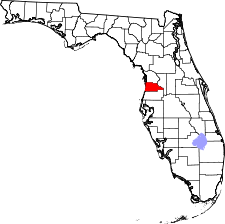
of Charlotte, DeSoto, Hardee, Manatee, Pasco, Pinellas, Polk and Sarasota. GeographyAccording to the U.S. Census Bureau, the county has a total area of 3,279 km² (1,266 mi²). 2,722 km² (1,051 mi²) of it is land and 558 km² (215 mi²) of it (17.00%) is water. The county's unincorporated area approximately 888 square miles, or more than 84 percent of the total land area. Municipalities account for 163 square miles. The modern boundaries of the county place it midway along the west coast of Florida. Adjacent Counties
DemographicsAs of the census of 2000, there were 998,948 people, 391,357 households, and 255,164 families residing in the county. The population density was 367/km² (951/mi²). There were 425,962 housing units at an average density of 156/km² (405/mi²). The racial makeup of the county was 75.17% White, 14.96% Black or African American, 0.39% Native American, 2.20% Asian, 0.07% Pacific Islander, 4.66% from other races, and 2.56% from two or more races. 17.99% of the population were Hispanic or Latino of any race. There were 391,357 households out of which 31.40% had children under the age of 18 living with them, 47.70% were married couples living together, 13.20% had a female householder with no husband present, and 34.80% were non-families. 26.90% of all households were made up of individuals and 8.10% had someone living alone who was 65 years of age or older. The average household size was 2.51 and the average family size was 3.07. The age distribution was as follows: 25.30% were under the age of 18, 9.30% from 18 to 24, 31.70% from 25 to 44, 21.70% from 45 to 64, and 12.00% were 65 years of age or older. The median age was 35 years. For every 100 females there were 95.80 males. For every 100 females age 18 and over, there were 92.70 males. The median income for a household in the county was $40,663, and the median income for a family was $48,223. Males had a median income of $34,111 versus $26,962 for females. The per capita income for the county was $21,812. About 9.10% of families and 12.50% of the population were below the poverty line, including 17.20% of those under age 18 and 10.00% of those age 65 or over. GovernmentA Home Rule Charter for Hillsborough County was approved by voters in a county-wide referendum held in September 1983, and the first County Commissioners elected under this new charter took office on May 28, 1985. The Home Rule Charter divides the power of county government between legislative and executive branches. The Board of County Commissioners, which composes the legislative branch, sets overall policy by means of ordinances, resolutions and motions. The executive powers of county government are vested in the County Administrator, appointed by County Commissioners and charged by the charter to faithfully implement the powers of the Board. The charter provides for a County Attorney, to be hired by the County Administrator with the advice and consent of the County Commissioners. The charter contains a provision for a Charter Review Board appointed by County Commissioners every five years to conduct a study of county government and propose amendments to the charter. These amendments must be presented to voters for approval. One amendment was approved in November 2002, adding the position of County Internal Performance Auditor to the government structure. This position reports directly to the County Commission. Presently the County Administrator is Pat Bean. There are seven members of the Board of County Commissioners for Hillsborough County. Four are elected from single-member districts, and three are elected county wide. The Board approves the County's operating and capital budgets and the County's capital improvement program. It may take action on any programs for the improvement of the county and the welfare of its residents. Under a Charter Ordinance that went into effect May 1985, County Commissioners are directed to perform legislative functions of government by developing policy for the management of Hillsborough County. The County Administrator, a professional appointed by the Board, and the administrative staff are responsible for the implementation of these policies. The Board also serves as the Environmental Protection Commission. Individual Board members serve on various other boards, authorities, and commissions such as the Hillsborough Area Regional Transit Authority, Tampa Bay Regional Planning Council, Tampa Bay Water, Aviation Authority, Expressway Authority, Sports Authority, Port Authority, Arts Council of Hillsborough County, Children's Board, Metropolitan Planning Organization and the Council of Governments. Hillsborough County charges a discretionary sales tax of 1% on top of Florida's 6%. It is only collected on the first $5000 of any large purchase. Municipalities and Unincorporated areasIncorporatedPlant CityTampa Temple Terrace Unincorporated
Unincorporated Communities not Census Designated Places
It is perhaps surprising that Tampa, Plant City, and Temple Terrace are the county's only incorporated places. For a county of its size, Hillsborough has an unusually high number of communities that are unincorporated, and an unusually high percentage of its people living in these areas. External linksGovernment Links
Special DistrictsJudicial branch
Tourism links
|
Chris Frantz
Exit Success Realty
13111 Spring Hill Dr
Spring Hill, FL 34609
Hernando County
352.~686.~2222 Office
352.~442.~3158 Cell

Exit Success Realty